
The Unshakeable Position: 5 Lessons from a 2,000-Year-Old Letter
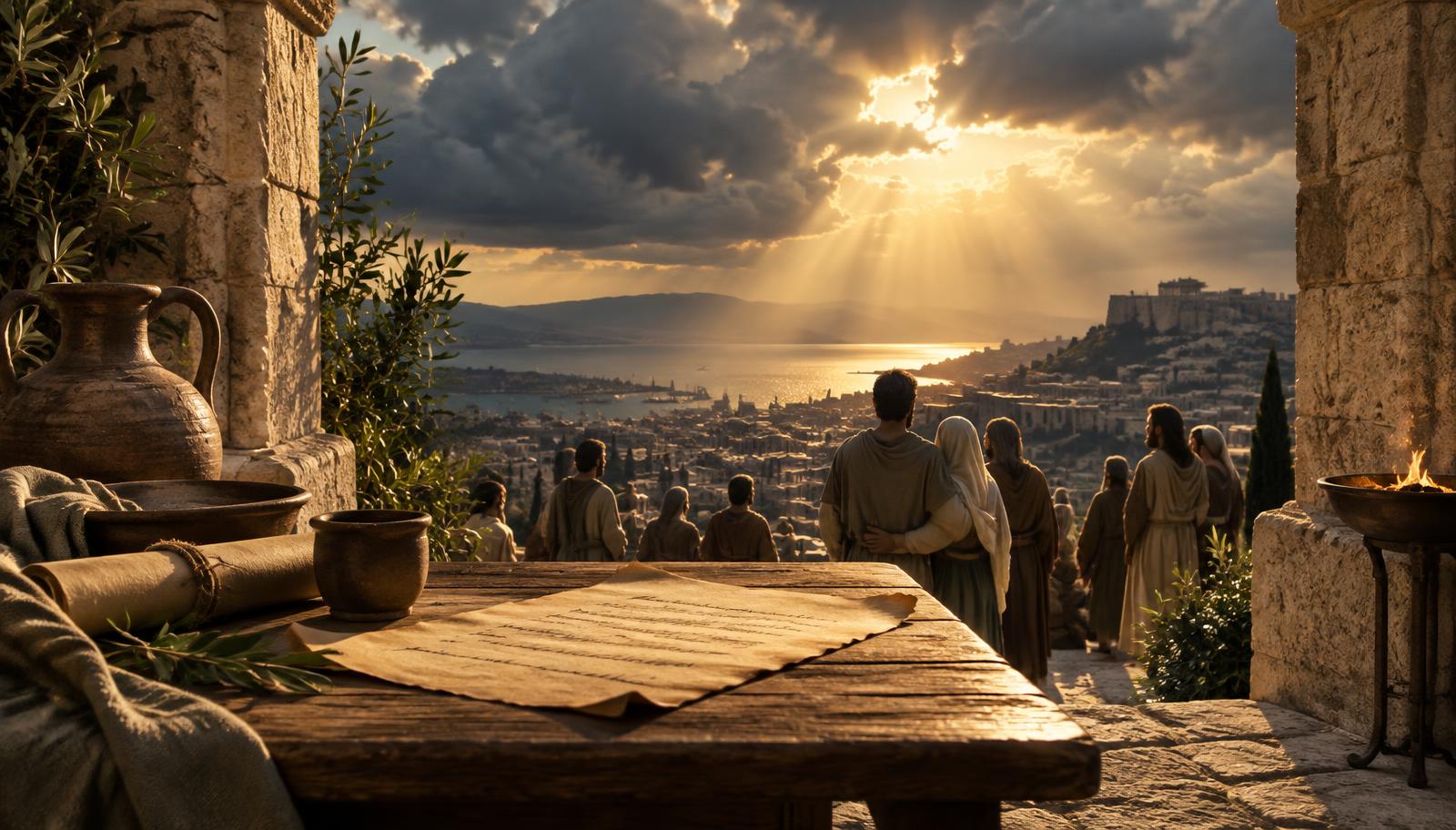
- •Our position in Christ is fixed even when circumstances change.
- •Gratitude is an obligation, not merely a feeling.
- •Thankfulness turns anxiety toward peace and want toward contentment.
- •Faith and love can grow under pressure.
- •Steadfastness keeps us faithful when optimism runs low.
1. The Weight of the Written Word
In autumn 1864, amid the mounting casualties of the Civil War, President Abraham Lincoln responded to a report of a grieving mother’s staggering loss with a letter of condolence. His words became an emotional anchor for a grieving nation.
Lincoln admitted that words could not remove overwhelming grief, yet he offered the nation’s thanks, prayer for heavenly comfort, and honor for costly sacrifice.
If a human letter can steady a nation’s soul, how much more potent is a divinely inspired one? Paul’s second letter to the Thessalonians was written as a heart-to-heart during persecution, bereavement, and theological anxiety. This ancient text teaches us to maintain an unshakeable posture when the world feels unstable.
2. The Power of a Single Preposition: “In”
In the deceptively simple salutation of 2 Thessalonians 1:1, Paul describes the church as being “in God our Father and the Lord Jesus Christ.” This is not introductory fluff. The Greek preposition en is the theological foundation of the letter.
Here, en describes a fixed position—established, immovable, and shielded from volatile external forces. This position is in God our Father, reminding us that our circumstances remain under His control, and in the Lord Jesus Christ, assuring us that there is now no condemnation for those who belong to Him.
The world around us may shake, but our position in Christ does not.
3. Gratitude Is Not a Feeling—It Is a Debt
In verse 3 Paul writes, “We ought always to give thanks for you, brothers, as is right.” The word translated “ought” comes from the Greek verb opheilo, meaning to owe, to be under obligation, or to be bound by duty.
For Paul, gratitude was not an elective sentiment. It was a moral debt. We are perpetually obligated to acknowledge with gratitude the blessing of our brothers and sisters in Christ.
When gratitude becomes a discipline rather than a mood:
- Anxiety gives way to peace. Our minds move from perceived threats toward divine favor. - Want gives way to contentment. We notice God’s abundance rather than only what seems missing. - Love for others increases. Gratitude directs our attention toward the good God brings through other people.
4. The Paradox of Growth Under Pressure
Paul observes that the Thessalonians’ faith was “growing abundantly” and their love for one another was increasing while they were being hammered by persecutions and afflictions.
Their growth did not happen in spite of the fire; God used the fire to facilitate it. External pressure caused them to lean more heavily on their fixed position in Christ and tighten the bonds of mutual love.
5. When Hope Feels Missing, Choose Steadfastness
In his first letter, Paul praised their faith, love, and hope. In this greeting, “hope” is curiously absent. Perhaps their hope was wavering under confusion and prolonged suffering. Paul instead points to hupomone—steadfastness.
> Hupomone: hopeful endurance, constancy, or patience.
If hope is the vision of a better future, steadfastness is the boots-on-the-ground expression of that vision. It is the grit to stay the course when hopeful feelings dim—the tangible evidence of faith when life is abrasive.
Conclusion: A Sermon Timeout for Your Life
The central truth of this 2,000-year-old correspondence is that our internal posture need not be dictated by our external environment. Because our position in Christ is fixed, we can grow in love and gratitude even under pressure.
When your surroundings feel unstable, remember where you are: in God our Father and the Lord Jesus Christ. Let that unshakeable position produce grateful worship, deeper love, and steadfast endurance.
Reflect: List specific people in our church for whom you are grateful and why.
Pray: Thank God each day for these people and the blessings they bring.
Act: Send a text, email, or handwritten note expressing specific gratitude. Do not wait for the feeling; pay the debt of it.
- What does it mean to be “in” God our Father and the Lord Jesus Christ?
- Who in our church gives you reason to thank God?
- How has pressure strengthened your faith or love?
- Where do you need steadfastness when hope feels weak?
- Who can you encourage with a note this week?
Join us for a service
Messages like this one are preached every Sunday at Daniels Road Baptist Church in Fort Myers. Come as you are — we'd love to save you a seat.
Have a question about this passage? Pastor Mike would love to sit down and talk.
Get in touch