
The Great Restraint: Ancient Insights into Modern Chaos
- •An urgent or authoritative-sounding message is not necessarily true; test it against Scripture.
- •Paul wanted the Thessalonian believers to remember what they had already been taught about the Day of the Lord.
- •Lawlessness is already at work, but God remains sovereign over its limits and its end.
- •Counterfeit signs and claims can deceive; the Lord Jesus will ultimately defeat the lawless one.
- •Loving the truth means being willing to receive correction, not just collecting information.
- •Our confidence rests in Christ and his Word, not in our ability to predict every event.
On October 30, 1938, a radio dramatization of The War of the Worlds sounded to some late listeners like a real news report. The broadcast mixed ordinary music with urgent bulletins about an imagined invasion. When a convincing message is taken out of context, fear can outrun the facts.
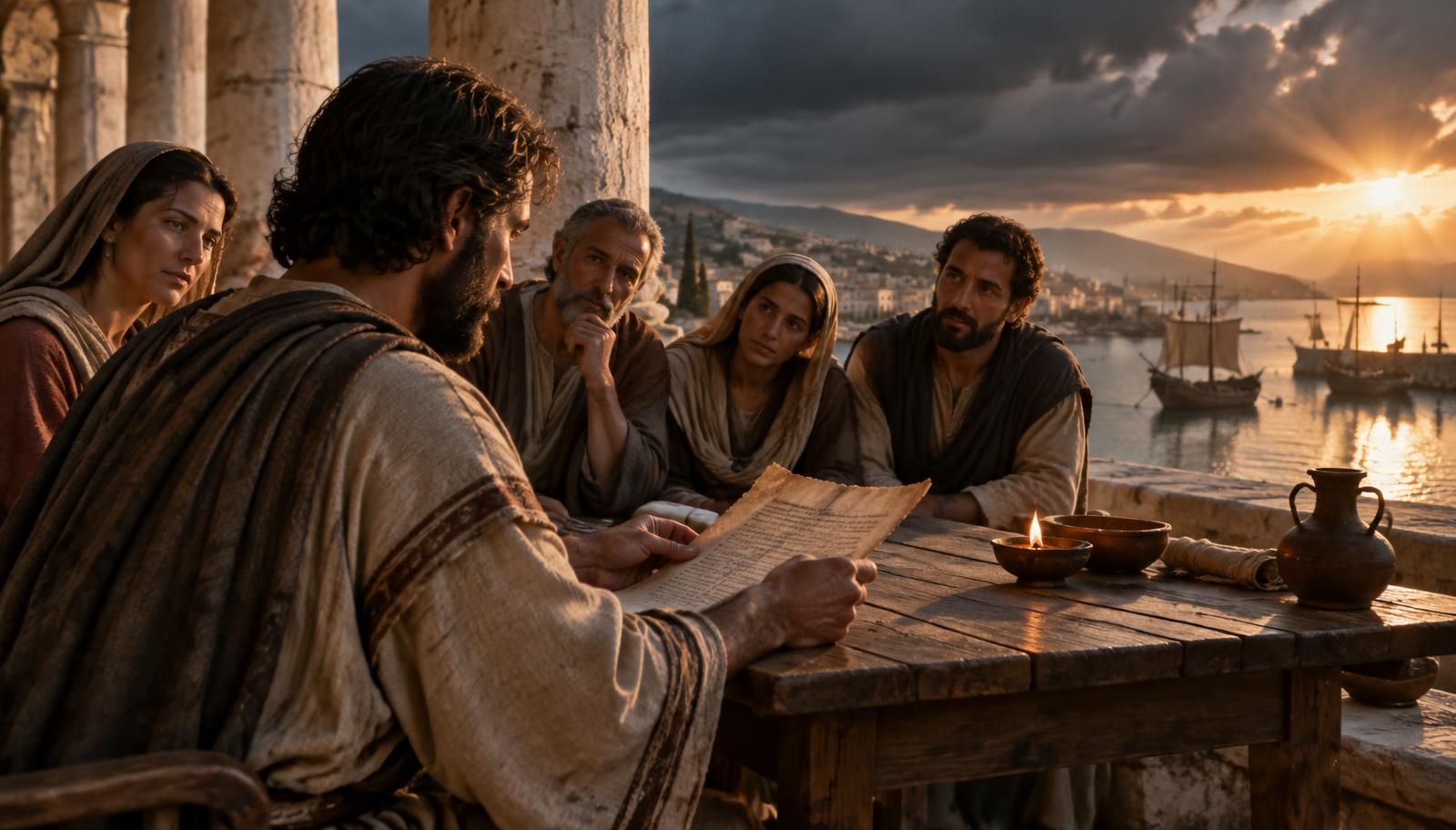
Long before radio, believers in Thessalonica faced a message that shook their peace: someone was telling them that the Day of the Lord had already come. Paul wrote to steady them, reminding them of what he had taught and pointing them back to the truth of Christ. His words in 2 Thessalonians 2:1–12 still speak to anyone trying to discern what is true amid alarming claims.
A Church Shaken by a Counterfeit Message
The Thessalonians were not strangers to hardship. Yet a false claim about the Lord’s return threatened to unsettle them in a new way. Paul urges them not to be quickly “shaken” or alarmed, whether the message appears to come by a spirit, a spoken teaching, or even a letter supposedly from him (2 Thessalonians 2:2).
That last detail matters. The problem was not simply an opinion they disagreed with; it was a claim dressed in the authority of someone they trusted. Their defense was to remember the teaching they had already received. Even when a message sounds urgent or spiritual, it must be tested against God’s Word.
The Restraint Holding Back Lawlessness
Paul says that the “mystery of lawlessness” is already at work, yet something—or someone—is restraining its full revelation (2 Thessalonians 2:6–7). Pastor Mike describes this as a divine restraint: evil is active, but it does not have the final word or unlimited freedom.
In this teaching, the Restrainer is understood to be the Holy Spirit working through the presence and witness of the Church. Paul does not name the restrainer outright in this passage, and Christians have understood this mystery in different ways. What is clear is that the Lord is not absent or surprised by the disorder we see. He remains sovereign over what is permitted and over what is still to come.
That perspective invites gratitude rather than panic. The world’s troubles are real, but the present moment is also an opportunity to live faithfully and share the good news of Jesus Christ.
The Man of Lawlessness and the Power of a Lie
Paul warns that before the Day of the Lord, the “man of lawlessness” will be revealed. This figure opposes God, exalts himself, and even claims a place that belongs to God alone (2 Thessalonians 2:3–4). His coming is accompanied by counterfeit signs and wonders intended to deceive (2 Thessalonians 2:9–10).
The danger is not force alone. Falsehood can be made to look compelling, even miraculous. Paul’s warning calls us to more than skepticism: it calls us to know the truth well enough to recognize its imitation. Christ does not need to compete with a counterfeit. At his appearing, the Lord Jesus will bring the lawless one to nothing (2 Thessalonians 2:8).
When People Refuse to Love the Truth
One of the passage’s hardest statements comes near the end. Paul says that those who refuse to love the truth and take pleasure in unrighteousness are given over to a powerful delusion (2 Thessalonians 2:10–12). He is not inviting us to guess who has crossed some invisible line. He is warning us that what we love shapes what we are willing to believe.
If we repeatedly push away the truth because it challenges what we want, a lie can begin to feel more comfortable. That is why discernment is not merely a skill for sorting headlines. It is a matter of the heart: do we welcome the truth, even when it corrects us?
Standing Firm in Christ
We are called to be Worthy in Christ, not because we can outthink every deception or make ourselves worthy by effort, but because our hope rests in Jesus. Truth is not only a collection of correct statements; Jesus himself is the One we trust. His Word gives us a foundation when frightening claims threaten to shake us.
So test what you hear. Return to Scripture. Stay close to the church. And use this time to tell others about the Savior who died and rose again. The mystery of lawlessness is at work, but Christ will have the final word.
A question to ponder: What message or voice has been shaping your perspective lately? Is it helping you stand firm in the truth of Christ, or slowly shaking your confidence in him?
- Before sharing an alarming claim, pause and ask what it actually says, where it came from, and whether it agrees with Scripture. - Read 2 Thessalonians 2:1–12 this week. Notice what Paul says to fear, what he says to remember, and what he says Christ will do. - Talk through a troubling message with a trusted believer rather than carrying the fear alone. - Ask God for a heart that loves the truth even when it challenges your assumptions. - Share the good news of Jesus with someone who needs hope in an unsettled world.
- What do you think made the false message about the Day of the Lord so unsettling to the Thessalonian believers?
- How can we test a persuasive or frightening claim against Scripture without becoming fearful of every new idea?
- How does knowing that God remains sovereign over lawlessness affect the way you respond to today’s news?
- What does it look like to love the truth when it corrects something you would rather believe?
- Which voice has had the strongest influence on your perspective this week, and how can you return to the foundation of Christ?
Join us for a service
In Fort Myers or Lee County and looking for a church home? Messages like this one are preached every Sunday at 10:30 AM at Daniels Road Baptist Church, with Sunday School at 9:15 AM. Come as you are — we'd love to save you a seat.
Have a question about this passage? Pastor Mike would love to sit down and talk.
Get in touch