
Finding Hope in the Grain Fields: 5 Surprising Lessons on Kindness and Redemption from the Book of Ruth
- •"Love at first sight" is a myth — real love is a choice we make and an action we take
- •There are no happy coincidences in God's economy; what looks like chance is Providence
- •Boaz and Ruth were drawn to observed character, not appearance
- •Kindness that goes beyond the minimum requirement is radical and counter-cultural
- •The ga'al (kinsman-redeemer) is a living blueprint of what Jesus did for us
- •Kindness is a garment you put on — on purpose
In my years of ministry, I've often shared the story of how I met my wife. I like to joke that it was "love at first sight" for me, but for her... I had to turn on the ol' "Banks charm" before she was buying what I was selling. In reality, though, the concept of "love at first sight" is a modern myth. Infatuation might strike in an instant, but true love is not a pit we fall into; it is a choice we make and an action we take.
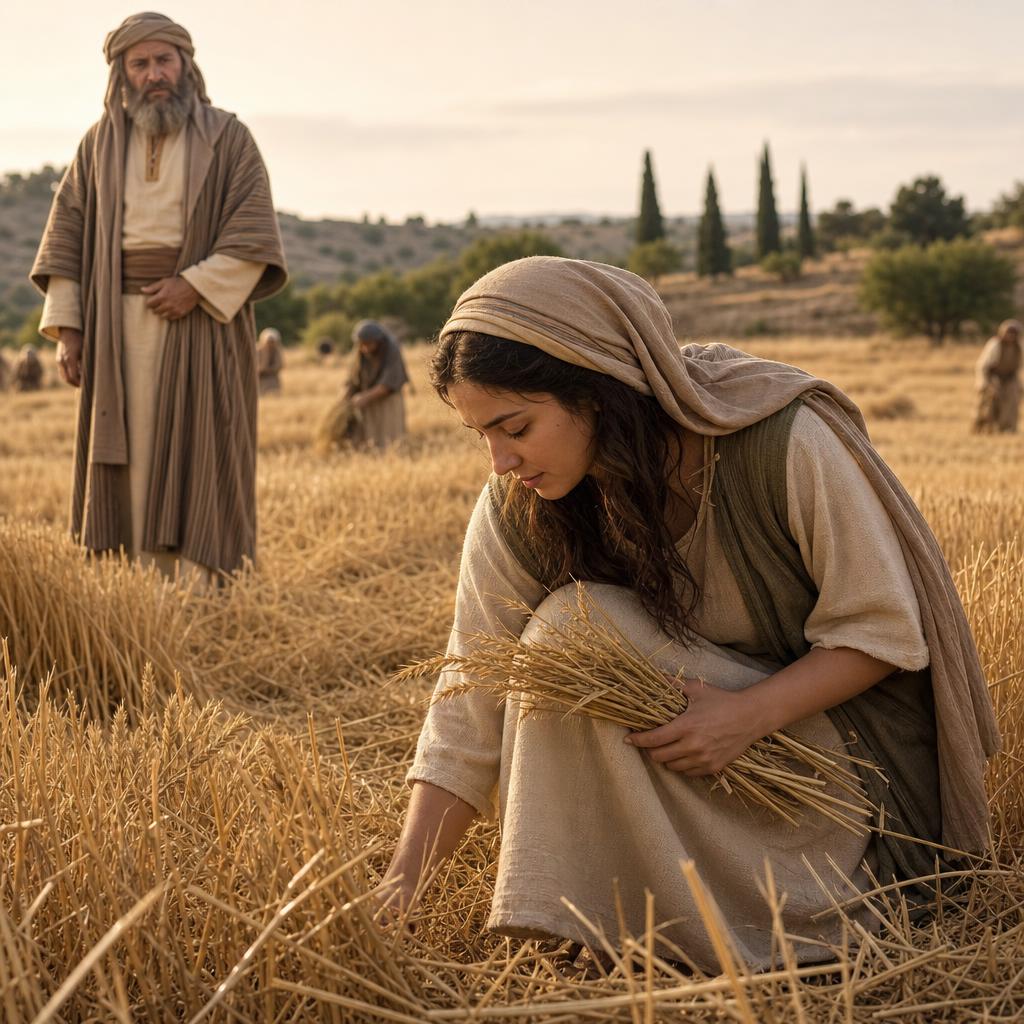
As we open Ruth chapter 2, we find a narrative far removed from a Hallmark movie script. There are no soft filters or easy resolutions here. We see two widows, Naomi and Ruth, arriving in Bethlehem at the beginning of the barley harvest. They are destitute, hungry, and socially vulnerable. This isn't a story of spontaneous romance, but of admiration at first sight — a slow-burning recognition of character and godliness that eventually paves the way for a deeper, redemptive love.
1. There Are No "Happy Coincidences" in God's Economy
As Ruth sets out to glean grain — a task reserved for the poorest of the poor — the text mentions in verse 3 that she "happened to come" to the field of Boaz. To the human eye, this looks like a stroke of luck or a fortunate accident. However, the original Hebrew reveals a much deeper truth.
The meaning of miqreh: often translated as "accident" or "chance," this term represents the intersection of human "hap" and the divine hand. It is the moment where our daily struggles meet God's sovereign Providence.
While it appeared accidental to Ruth, this was divine sovereignty at work. We may feel like we are wandering through the fields of our own lives, hoping for a break, but there is no such thing as "fortune" in God's economy. What we perceive as a coincidence is simply the quiet unfolding of God's plan, leading a vulnerable woman to the exact field where her redeemer waited.
2. Character is the Real "Love at First Sight"
When Boaz first notices Ruth, he doesn't ask about her appearance; he asks about her identity. Their mutual attraction was built on observed godliness during a time — the era of the Judges — when most people simply did "what was right in their own eyes."
Boaz is described as a "worthy man," a term encompassing the Hebrew concepts of gibbôr (powerful, strong) and chayil (wealth, virtue). He was a man of influence, but more importantly, a man of character.
What Ruth saw in Boaz. She observed his integrity and his relationship with his staff. In verse 4, he greets his reapers with "The LORD be with you," and they respond with a sincere "Yahweh bless you." This unusual warmth in a lawless time signaled to Ruth that this was a man who truly walked with God. She also experienced his kindness and generosity toward her. He cared for her and protected her, and for Ruth the Moabite — who had undoubtedly encountered her fair share of unfriendly glares and nasty comments — the kindness of Boaz was a source of comfort.
What Boaz saw in Ruth. He heard the foreman's report of her diligence — how she had been working from morning until evening with barely a rest. He saw her chayil (virtue) in her fierce loyalty to Naomi and her willingness to leave her native land to seek refuge under the wings of the God of Israel.
3. Kindness as a Radical, Counter-Cultural Act
We must remember that Ruth was not just a widow; she was "Ruth the Moabite." In Israel, Moabites were often met with deep-seated xenophobia and historical hatred. Ruth had come to expect dirty looks or threats; but she found "comfort" in Boaz's words.
Boaz's kindness was radical because it was intentional and went far beyond the minimum requirements of the law. He didn't just allow her to exist in his field; he provided:
1. Protection. He gave strict orders to his young men not to touch her, shielding a foreign woman who had no legal rights. 2. Provision. He invited her to his table and told her to drink from the water jars filled by his workers — water meant for the staff, not for a foreign sojourner. 3. Abundance. He commanded his reapers to pull "handfuls of grain" out of the bundles on purpose and drop them for her. This was not passive charity; it was purposeful generosity designed to preserve her dignity.
> "Why have I found favor in your eyes, that you should take notice of me, since I am a foreigner?" — Ruth 2:10
4. The "Ga'al" — A Blueprint for the Gospel
In verse 20, Naomi recognizes Boaz's name and identifies him as a ga'al — a kinsman-redeemer. In Hebrew law, the ga'al had a dual obligation: to buy back a relative's lost property, and to enter into a levirate marriage to carry on the family line of a deceased kinsman.
The ga'al was someone who sacrificed his own resources and future for the good of another. This is the ultimate blueprint for the Gospel of Jesus Christ.
Jesus is the literal, ancestral descendant of Boaz and Ruth. In Matthew 20:28, Jesus explains that He came to give His life as a ransom — a word that literally means "redemption price."
- Boaz purchased property and a family line at his own expense. - Jesus purchased our freedom from sin and death with His own blood.
Because Jesus was fully God, He was sinless and could pay the price. Because He was fully human, He could stand as our kinsman. He is our ultimate ga'al, sacrificing His own good to pay a debt we could never afford.
5. Kindness is a Garment You Must Choose to Wear
The Book of Ruth teaches us that kindness is not a feeling to wait for; it is a garment we are commanded to "put on" (Colossians 3:12).
For some, kindness comes naturally — they are the first to serve and the last to leave. But for others, the temptation is to stay home, watch TV, and ignore the needs of the world. However, as new creatures in Christ, kindness must define us. It is the fruit of the Spirit in action. We are called to be kind "on purpose," making concrete plans to show the grace of God to those around us, even when it is inconvenient.
A Call to Purposeful Kindness
The "math" of the second chapter of Ruth is staggering. After a single day of work, Ruth threshed out an ephah of barley. That is roughly half a bushel, or 24 pounds of flour — enough to bake 25 to 30 cakes of flatbread. Because of Boaz's intentionality, Ruth's seven weeks of work through the barley and wheat harvests provided a massive, tangible storehouse of hope for two widows who had arrived with nothing.
This transformation from vulnerability to security was fueled by purposeful kindness. It reminds us that redemption often looks like a person stepping into someone else's struggle to offer a seat at the table.
Think of one person who needs an expression of kindness this week. Don't wait for inspiration. Make a plan: What will you do? When will you do it? Then follow through.
Be kind on purpose — go beyond the minimum. Boaz didn't simply permit Ruth to glean; he pulled handfuls out on purpose. Ask the Lord to show you where a small, deliberate act of generosity could restore someone's dignity.
If redemption is about sacrificing our own good for the good of another, whose "field" can you step into today to offer hope?
- Where in your life have you called something a coincidence that was really God's providence?
- What would people say your character reveals about your walk with God?
- Who in your circle is treated as an outsider, and how could you offer them comfort this week?
- How does seeing Jesus as your ga'al change the way you view your debt of sin?
- What is one concrete, planned act of kindness you will carry out before next Sunday?
Join us for a service
In Fort Myers or Lee County and looking for a church home? Messages like this one are preached every Sunday at 10:30 AM at Daniels Road Baptist Church, with Sunday School at 9:15 AM. Come as you are — we'd love to save you a seat.
Have a question about this passage? Pastor Mike would love to sit down and talk.
Get in touch